🌱 A year in the Garden and Allotment  – Hints and Tips on sowing and planting

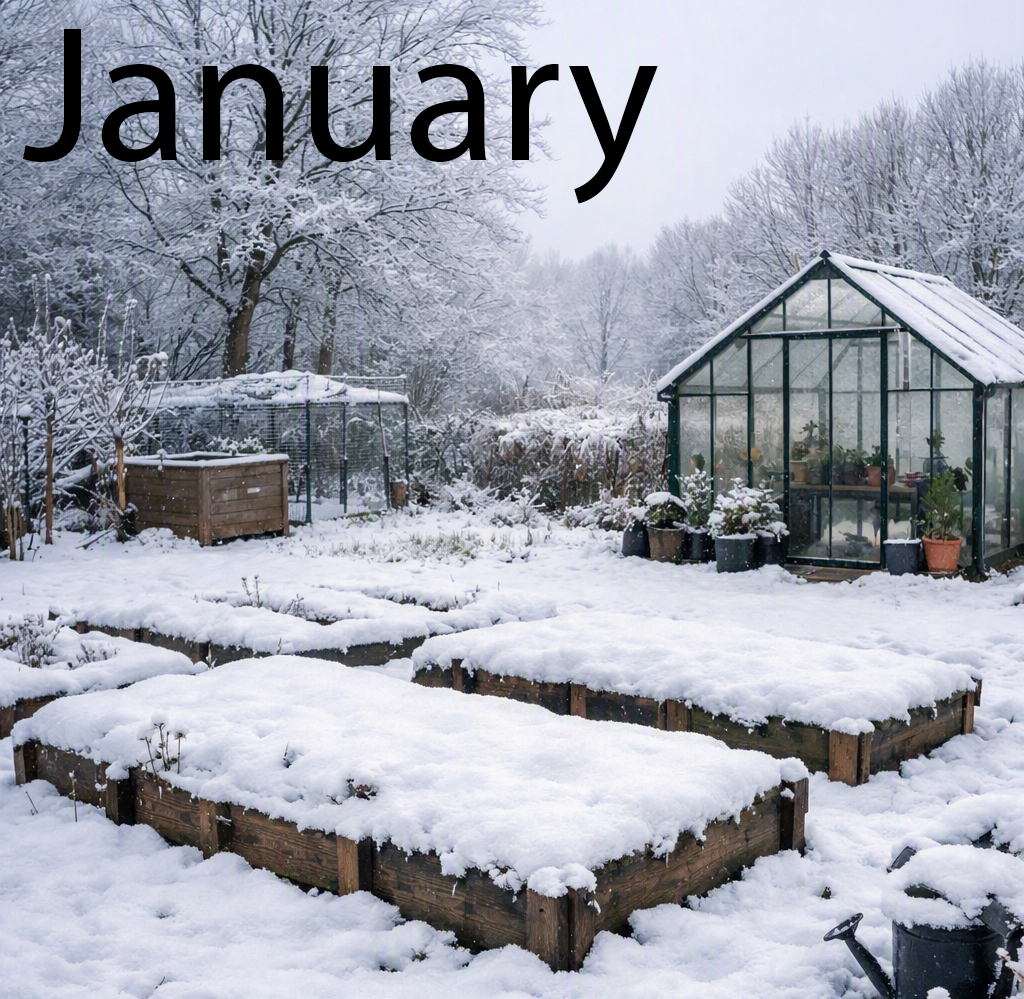
🌱 January – what to sow and do

What to sow in January

January is a quiet month outdoors, but a surprisingly productive one under cover.

  • Begonia, lobelia, pelargonium and salvia seeds can be sown now in a heated greenhouse or propagator. These tender annuals need a long head start to flower well in summer.
  • Sweet peas sown in autumn can be potted on this month. If you didn’t sow any earlier, you can sow a fresh batch now — they’ll still make strong, early plants.
  • Keep all seedlings in good light and turn trays regularly so they grow straight rather than leaning towards the window.

What to do in January

  • Clean the greenhouse, cold frames and pots so everything is ready for spring sowing. A good scrub helps prevent pests and diseases lingering from last year.
  • Prune apple and pear trees while they’re dormant. Remove crossing branches and open up the centre to improve airflow.
  • Start forcing rhubarb by covering a crown with a large pot or forcing jar. This encourages tender, early stems.
  • Put out food and water for birds — they’re invaluable allies in pest control later in the year.
  • Plan your vegetable crop rotation. Rotating crops helps prevent disease build‑up and keeps the soil healthy. A little planning now saves a lot of trouble later.

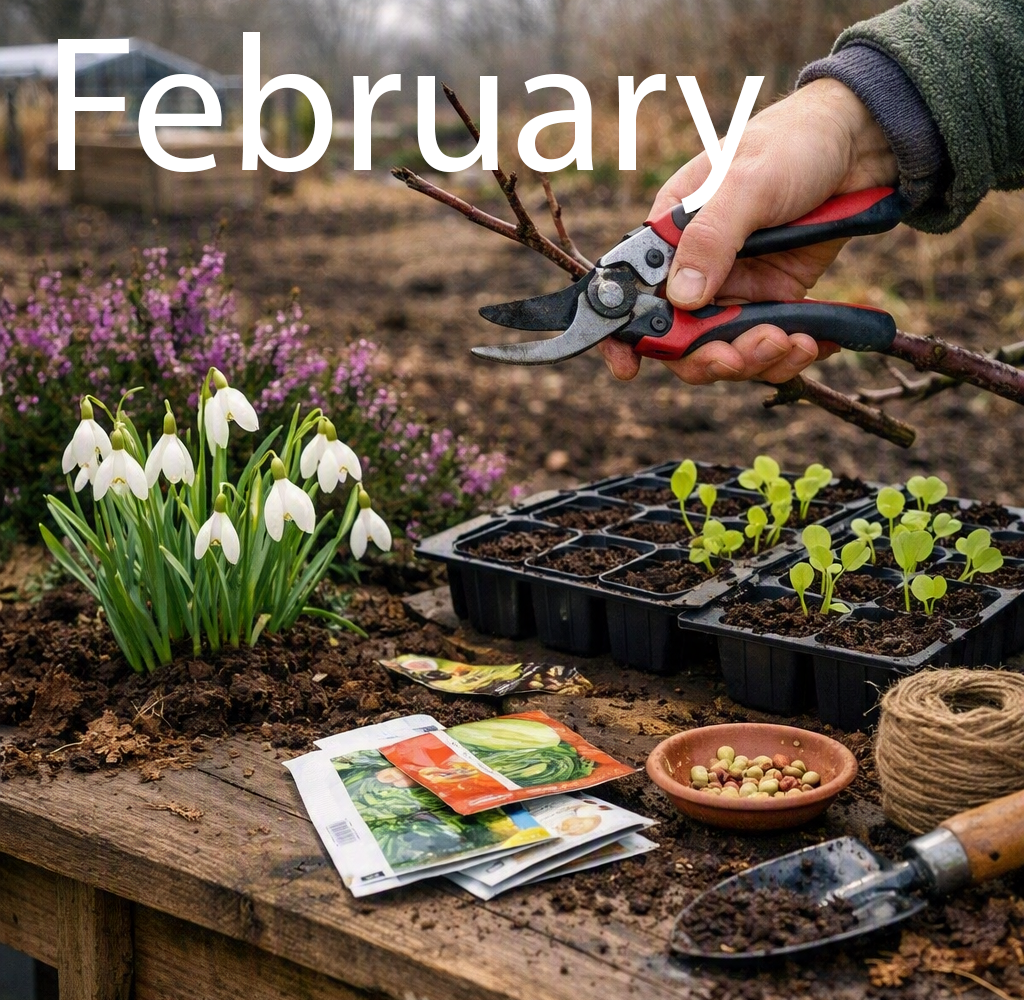
🌧️ February – what to sow and do

What to sow in February

February is the month when gardeners start to feel the season turning — slowly, but enough to get things moving. There’s plenty you can sow now, especially with a bit of protection.

  • Some hardy vegetables can be sown outside under cover. Cloches, fleece or a cold frame will help warm the soil and protect seedlings.
  • In warm indoor conditions (heated greenhouse or propagator), sow tomatoes, cucumbers and sweet peppers. These need a long growing season, so an early start pays off.
  • Sow leeks under cover. They germinate well in trays and can be planted out later in spring.
  • Make early sowings of brassicas: Brussels sprouts, summer cabbage, cauliflower and other hardy types. They appreciate the cool start.
  • Broad beans can be sown outside if the ground is not frozen or waterlogged. They’re tough plants, but they dislike sitting in cold, soggy soil.
  • Chit potato tubers by placing them in a cool, bright, frost‑free place. Short, sturdy shoots now mean stronger plants later.

What to do in February

  • Net overwintering vegetables to keep hungry birds off — pigeons in particular can strip brassicas overnight.
  • Remove weeds from around the base of young trees and shrubs. Even small weeds compete for moisture and nutrients.
  • Mulch and feed shrubs to give them a good start as temperatures begin to rise.
  • Prune hardy shrubs towards the end of the month, once the worst frosts have passed.
  • Continue preparing seed beds — breaking up clods, removing stones and adding compost where needed.
  • If the weather is mild and the grass is dry, give the lawn its first cut of the year, keeping the mower set high to avoid stressing the grass.

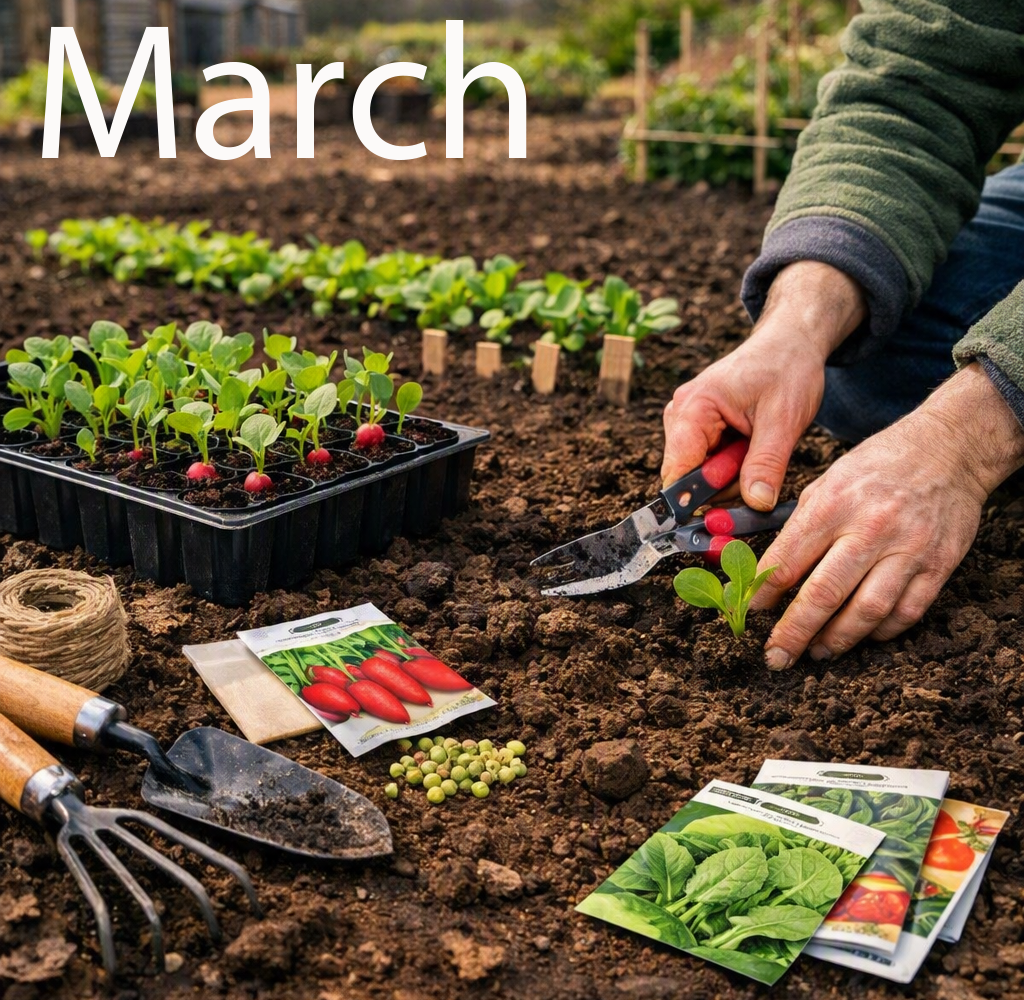
🌱 March – what to sow and plant

What to sow in March

  • Some vegetables can now be sown directly outdoors.
  • Plant onion sets, shallots, and early potatoes.
  • Protect tender new shoots from slugs and pigeons.
  • Continue sowing Brassicas, Brussels sprouts, summer cabbage, and cauliflower.
  • Seedlings will need daily attention — keep an eye on watering and light.
  • Check your seed packets: many varieties can now be started in trays or pots, sheltered from frost.
  • A great month for planting roses.

What to do in the Garden

  • Lift and divide overgrown perennials.
  • Refresh containers with fresh compost.
  • Keep removing weeds from around the base of young trees and shrubs.
  • Mulch and feed shrubs to support spring growth.
  • Continue preparing seed beds for upcoming sowings.
  • If the weather is mild and the grass is dry, mow the lawn — but keep the mower blades high.

🌿 Tackling Moss in Your Lawn

To prevent moss from returning, encourage vigorous grass growth through feeding and regular maintenance. Key tips include:

  • Use shade-tolerant grass seed or turf in shaded areas. Reducing shade helps too.
  • For compacted areas, spike the lawn with a garden fork or mechanical slitter to aerate the turf.
  • On heavy soils, use a hollow-tiner in autumn every 3–4 years, then brush in a mix of:
    • 3 parts sandy loam
    • 6 parts sharp sand
    • 1 part multi-purpose compost
  • Avoid mowing grass too short.
  • On very acidic soils, apply garden lime at no more than 50g per sq m (1½oz per sq yd) to reduce acidity and discourage moss.

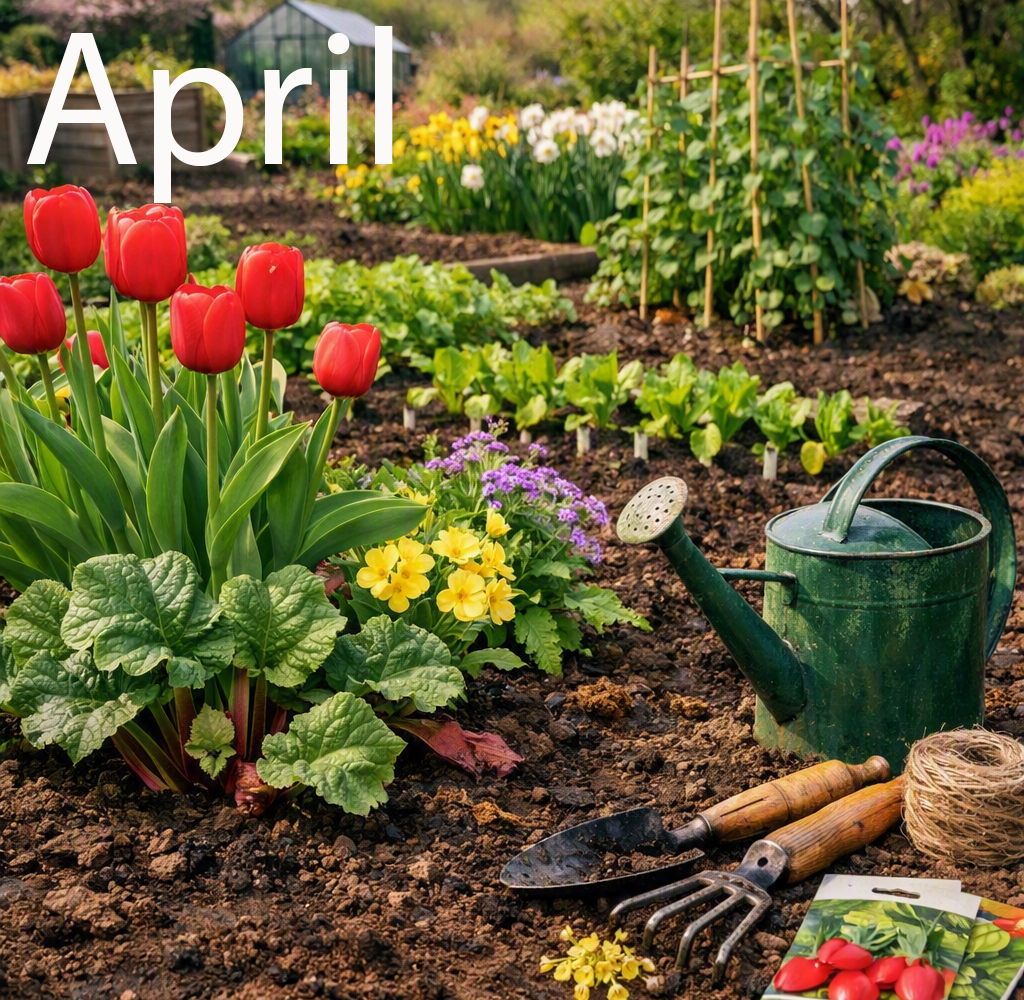
🌷 April – what to sow and plant

(Beware of late frosts — they can still catch us out!)

What to sow in April

Under cover (indoors or in the greenhouse):

  • Marrows, courgettes, pumpkins, squashes
  • Sweet peppers, tomatoes, cucumbers, aubergines
  • Celery and celeriac
  • Salads and globe artichokes
  • Courgettes, marrows, squashes, cucumbers and pumpkins all do well when sown in individual 5cm pots under cover.

Outdoors in prepared beds:

  • Early beetroot
  • Carrots — for best results, companion plant with onions, leeks or chives, or cover with fine mesh to deter carrot fly
  • Celeriac: Needs a long growing season for an autumn/winter harvest. Sow now under cover, then pot on when seedlings are large enough to handle.
  • Leeks: Sow in seed trays under cover for harvesting from autumn.
  • Lettuce: Best started under cover in April.
  • Peas: Can be sown directly outside, but mice love them. If they’re a problem, sow indoors and plant out when seedlings reach around 15cm tall.
  • Late April sowings: Radish, Swiss chard, spinach, turnips.

What to do in April

  • Keep weeds under control — they grow fast this month.
  • Protect fruit blossom from late frosts.
  • Sow hardy annuals and wildflower seeds outdoors.
  • Feed hungry shrubs and roses to support strong spring growth.
  • Sow new lawns and repair bare patches.
  • Prune fig trees.
  • Tie in climbing roses.
  • Put up netting and support structures now for fruiting plants — much easier before the growth spurt begins. (The Hut stocks a variety of netting and supports.)
  • As the weather warms, ants may become a nuisance indoors. (The Hut has four types of ant killer available.)
  • It will soon be warm enough to apply spring/summer lawn fertiliser and selective weedkillers, if needed.

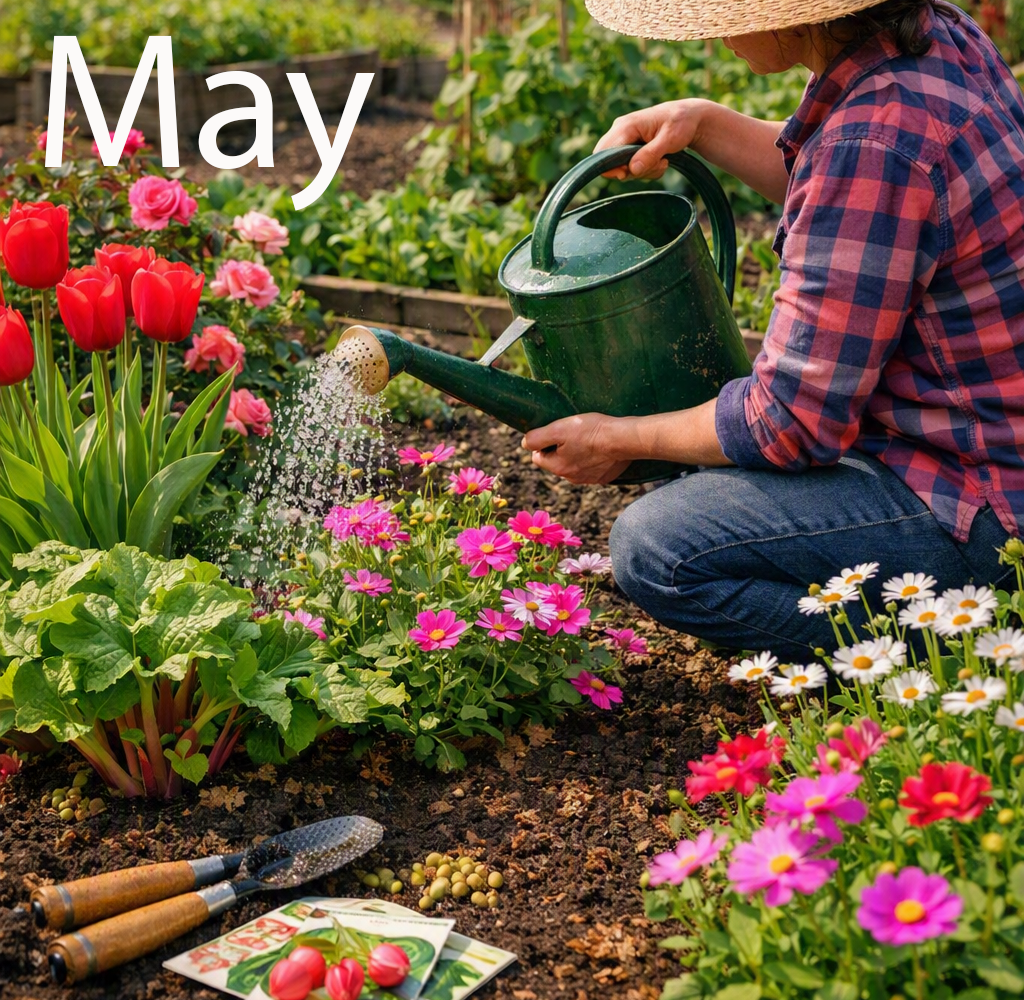
🌼 May – what to sow and plant

What to sow or plant in May

  • If the weather is very mild, you can sow dwarf French beans and sweetcorn directly outside — but give them a bit of protection under cloches or fleece to help them along.
  • Sow cabbages, cauliflowers, sprouts and broccoli — they enjoy the lengthening days.
  • Brussels sprouts should be sown this month if you want them ready for the end of the year. After May, they tend to run late.
  • Courgettes, pumpkins and other squashes can be sown now; they grow quickly once the soil warms.
  • Florence fennel and kohl rabi can be sown for crisp, flavourful harvests later in the season.
  • Leafy vegetables (lettuce, spinach, chard) will appreciate the improving light levels.
  • Peas, melons, and sweetcorn can all be sown now — melons especially benefit from warmth, so choose a sheltered spot.
  • Towards the end of May, when frosts are unlikely, you can plant out summer bedding for instant colour.

What to do in May

  • Beware late frosts — they can still catch you out. Keep fleece handy for tender plants.
  • Earth up potatoes, covering the stems to protect them from light and encourage more tubers. Plant any remaining seed potatoes now.
  • Thin out crops to give seedlings room to grow strong and healthy.
  • Harvest rhubarb and early lettuce — both are at their best this month.
  • Start removing tomato side shoots to encourage strong, upright plants and better fruiting.
  • Water early or late in the day to reduce evaporation and help plants make the most of the moisture.
  • Hoe weeds regularly — little and often keeps them under control before they take hold.
  • Mow lawns weekly, adjusting the height depending on growth. A slightly higher cut helps lawns cope with dry spells.

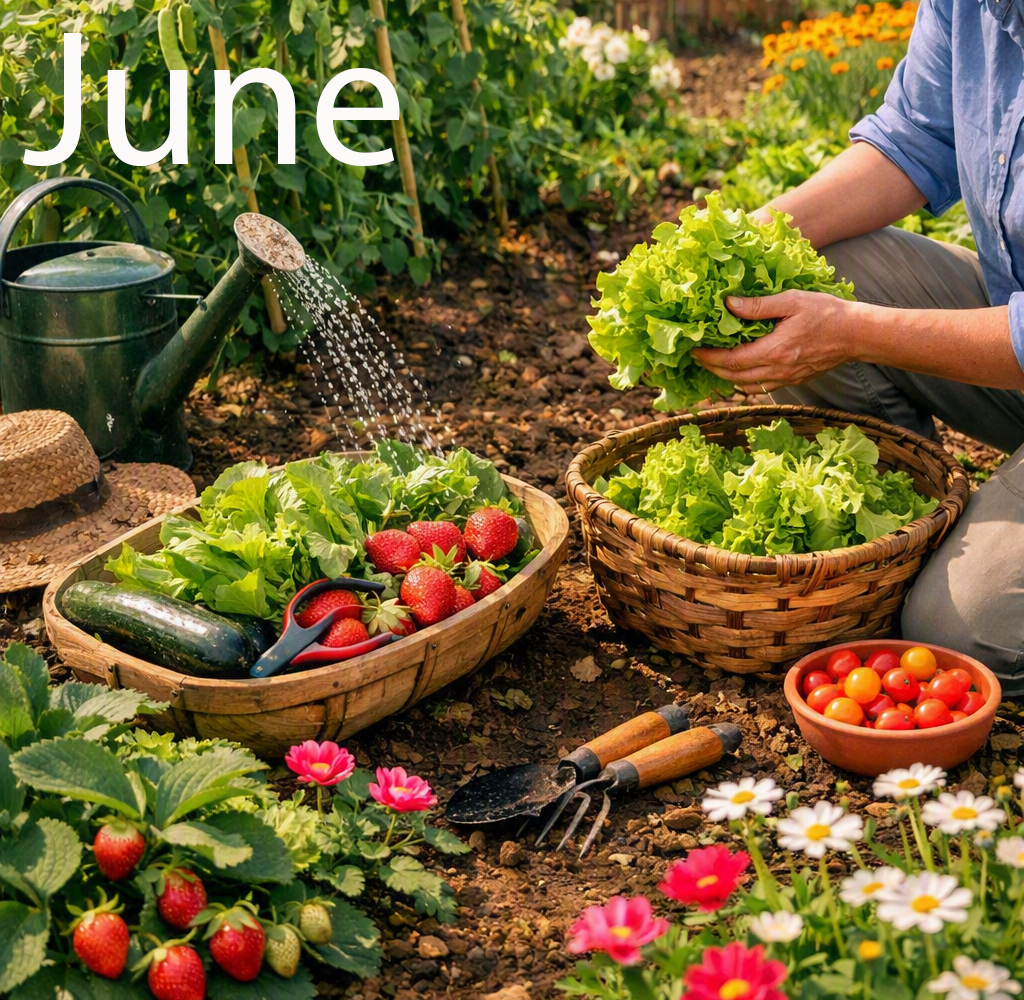
🌞 June – what to sow or plant

June is the month when the garden really wakes up — and most crops are finally ready to go into their final growing positions.

What to plant in June

  • Brussels sprouts, cabbages, cauliflowers and celeriac can all be planted out now. They appreciate the longer days and steady warmth.
  • Courgettes, cucumbers, French and runner beans are ready for their permanent homes — they’ll romp away once the soil is warm.
  • Leeks can be planted out into their final trenches or holes.
  • Pumpkins, squashes and sweetcorn can be planted out now; sweetcorn does best in blocks rather than rows for good pollination.
  • Outdoor tomatoes can be planted into beds, growbags or large pots.
  • Whatever you plant, water in carefully to settle the roots.
  • Protect young plants from birds with netting — especially brassicas and sweetcorn.

(Netting is available in The Hut.)

What to do in June

  • Keep weeds under control — they grow fast in warm weather and compete for water and nutrients.
  • Continue removing tomato side shoots to keep plants tidy and encourage strong fruiting trusses.
  • Train climbing beans up their supports and make sure peas are securely tied in or netted.
  • Watch for pests and diseases — aphids, blackfly, mildew and caterpillars can all appear quickly this month. Early action makes a big difference.

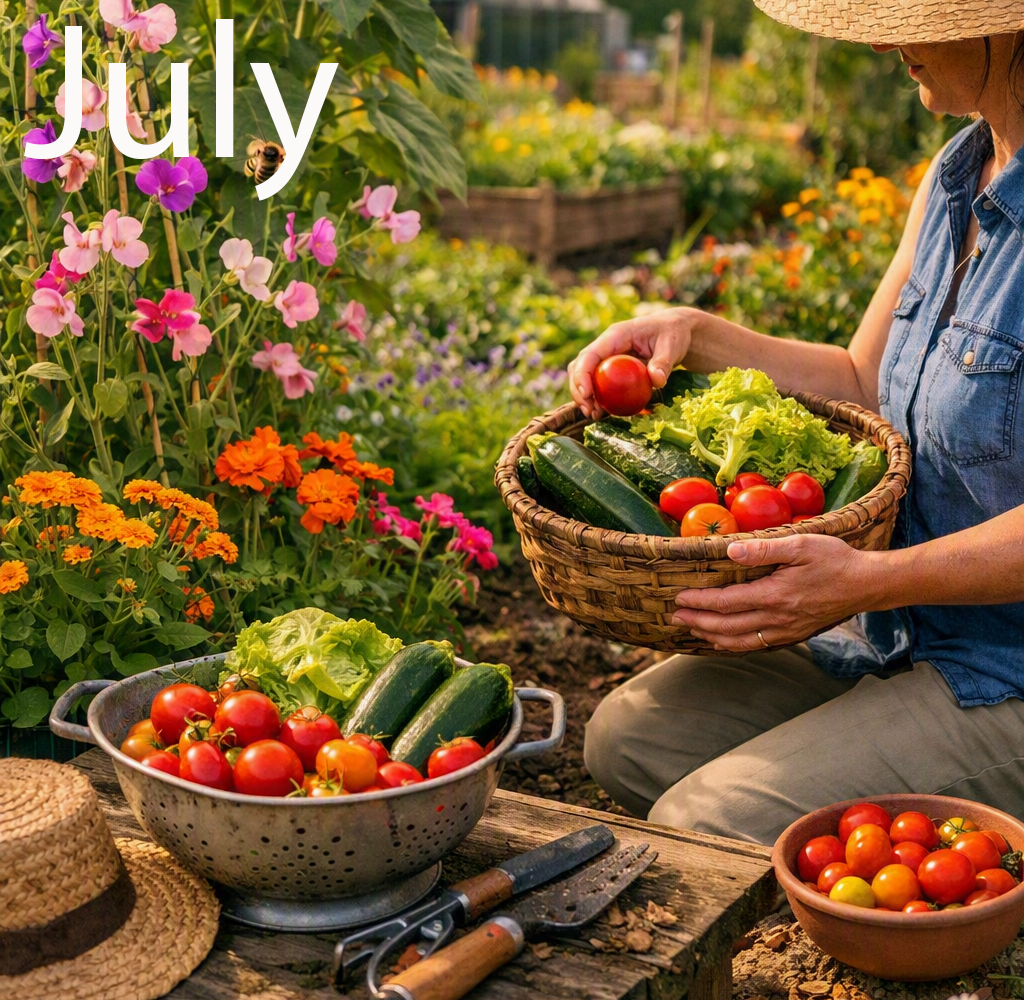
🌻 July – what to Sow

July is a surprisingly good month for sowing — especially if you’re thinking ahead to autumn and winter harvests.

What to plant in July

  • Start sowing overwintering crops such as spring cabbage, kales, chicory and spinach beet. These will establish now and stand well into the colder months.
  • Sow main‑crop carrots — this later sowing helps avoid the worst of the carrot fly season.
  • Continue sowing lettuce, radish, spring onions and beetroot for a steady supply of salads.
  • Runner beans and French beans can still be sown; they’ll crop later but often very generously.

What to do in July

  • Keep weeds under control — they grow rapidly in warm weather and compete for water.
  • Lift first and second early potatoes; they should be ready now. Enjoy them fresh — they don’t store long.
  • Watch for potato blight. Early signs include dark, greasy patches on leaves. Remove affected foliage promptly.
  • Protect fruit with netting to keep birds off ripening berries and soft fruit.
  • Water thoughtfully:
    • Leafy crops need more water or they’ll bolt.
    • Runner and French beans appreciate frequent watering, especially in dry spells.
    • Courgettes and marrows also need consistent moisture to avoid tough skins.
  • Give your lawn a summer feed to keep it green through dry spells.
  • Deadhead bedding plants and repeat‑flowering perennials to keep them blooming for longer.
  • Pick courgettes while they’re small — they taste better and it stops them turning into marrows overnight

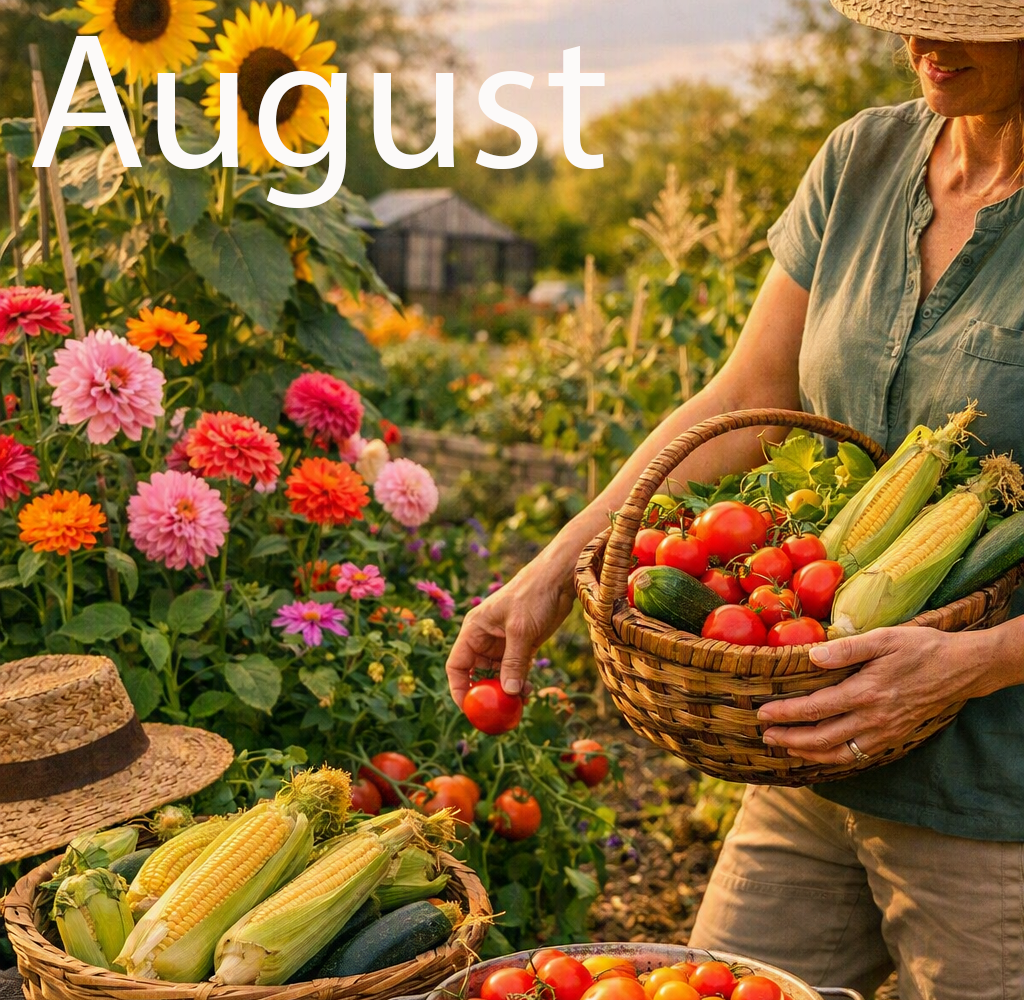
🌾 August – what to sow

August is still a productive month — perfect for sowing fast‑growing crops and setting up your autumn and winter harvests.

What to sow in August

  • Lettuce – sow little and often, but keep trays or young plants out of the harsh midday sun to stop them scorching.
  • Rocket, spring onions and radish – quick, reliable crops that will keep salads going into autumn.
  • Winter salads, including mustard leaf and lamb’s lettuce, can be sown now for cool‑season picking.
  • Kale – sow up to mid‑August for strong plants that will stand well into winter.
  • Spinach – thrives in cooler weather and can survive frosts and heavy rain later in the year.
  • Spring cabbage – sow now for planting out in autumn and harvesting next spring.

What to do in August

Harvest time!

  • Expect an abundance of runner beans, courgettes and marrows — and the annual promise to yourself not to plant quite so many next year… until next year arrives.
  • After sharing with neighbours (to the point where they start hiding behind the curtains), consider freezing, pickling, or making runner bean chutney.
  • Keep watering, especially:
    • Leafy crops, or they’ll bolt.
    • Runner and French beans, which crop better with consistent moisture.
    • Courgettes and marrows, which toughen if they dry out.
  • Deadhead flowering plants regularly to keep them blooming through late summer.
  • Collect seed from garden plants — it’s satisfying, economical, and great for next year.
  • Lift and pot up strawberry runners to create new plants for next season.
  • Cut out old fruited raspberry canes to make room for new growth and improve airflow.

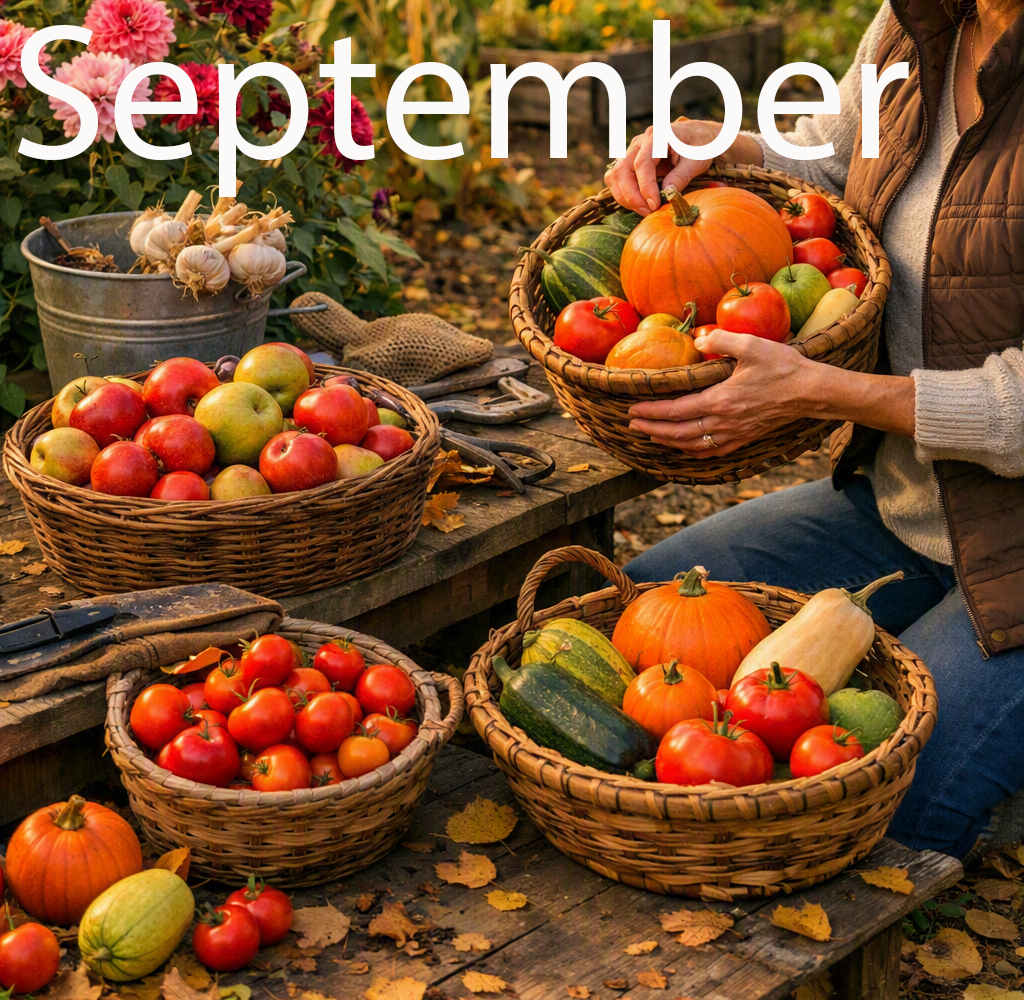
🍎 September – what to sow and plant

September is a bridge between summer abundance and autumn preparation — a great month for sowing crops that will stand through winter and mature next spring.

What to sow and plant in September

  • Winter lettuce, spinach and turnips can all be sown now for harvesting in the cooler months ahead. They prefer the gentler temperatures of early autumn.
  • Overwintering onion sets can be planted out now; they’ll establish before winter and be ready next summer.
  • Spring cabbages should also be planted out this month so they can settle in before the cold weather arrives.
  • Sow green manures such as field beans, grazing rye or clover. When dug in later, they help conserve nutrients, improve soil texture and suppress winter weeds — a great investment in next year’s soil health.

What to do in September

  • Harvest apples and pears. A good sign they’re ready is when a few start to fall naturally. Taste and texture are also reliable guides — they should come away from the branch with a gentle twist.
  • When asparagus foliage turns brown, cut it down to ground level and give the plants a generous mulch to protect the crowns over winter.
  • Water during dry spells — it helps prevent:
    • splitting in root vegetables,
    • flower drop in runner beans,
    • blossom end rot in tomatoes.
  • Even in September, plants can still suffer from sudden dry periods.
  • Pumpkins and winter squash still need regular watering to keep them swelling nicely. A check in growth now will reduce their final size.
  • Finish planting out rooted strawberry runners so they have time to establish before winter.

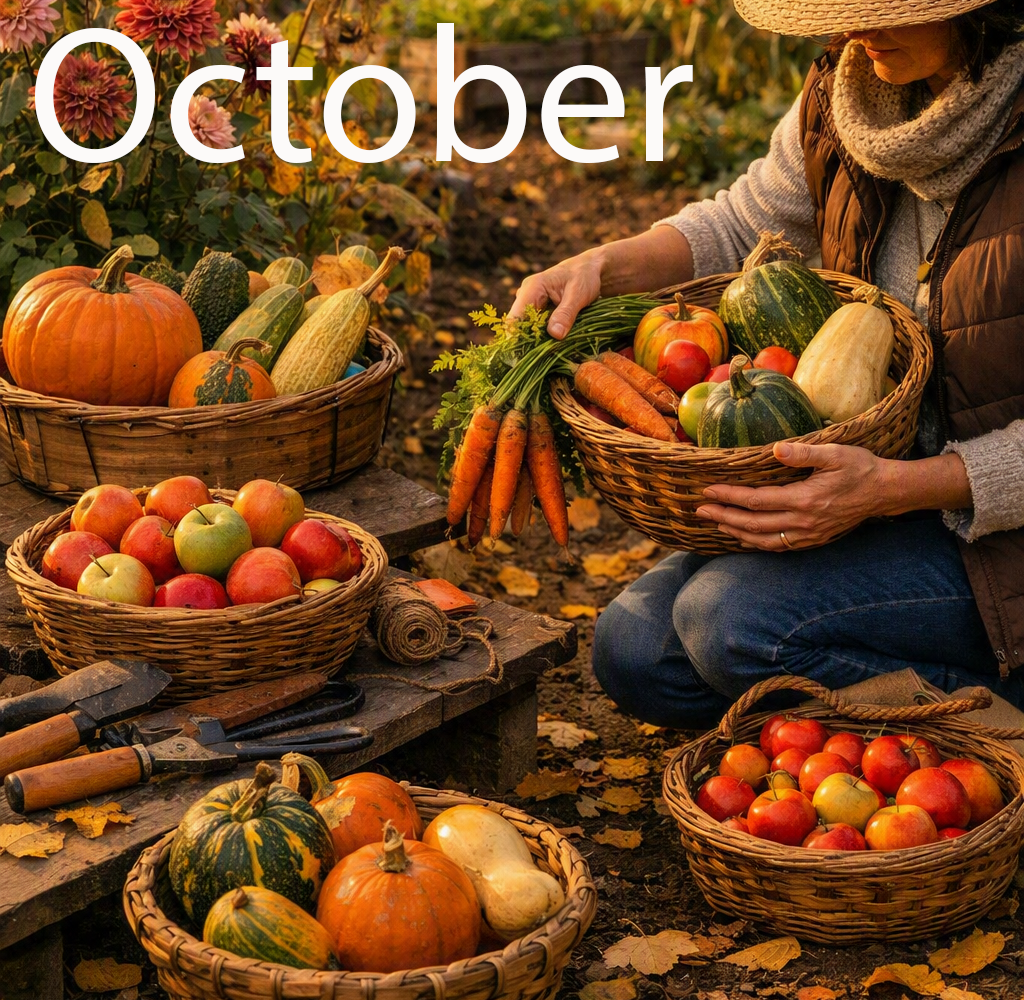
🍂 October – what to sow and plant 

October is a month of winding down and preparing the plot for winter — but there’s still plenty you can sow and plant.

What to sow and plant in October

  • Sow overwintering broad beans. They’ll establish before the cold sets in and give you a head start next spring.
  • Peas such as Douce Provence or Meteor can be sown under cover. They can be sown outside too, but only in mild areas where frost risk is low.
  • Plant out spring cabbages, giving them time to root in before winter.
  • Autumn onion sets and garlic cloves can go in now — they love the cool soil and will grow steadily over winter.
  • Plant fruit trees and bushes, or pot up new ones. This is the perfect time while the soil is still warm and moist.
  • Take cuttings of gooseberries and currants — they root well at this time of year.
  • Green manures can still be sown until mid‑month. They protect bare soil, suppress weeds and add nutrients when dug in later.

What to do in October

  • Cut back the dying tops of Jerusalem artichokes to ground level. The tubers can stay in the soil until you’re ready to lift them.
  • Cut back asparagus foliage once it turns brown, then mulch the crowns to protect them over winter.
  • Remove yellowing leaves on Brussels sprouts to improve airflow and reduce disease.
  • Clear plant debris from beds and borders. This helps prevent pests and diseases overwintering in the soil.
  • Mulch under fruit trees and bushes — it helps retain moisture, suppress weeds and protect roots from winter cold.
  • When clearing old pea and bean plants, simply cut off the tops and leave the roots in the soil. They contain nitrogen‑fixing nodules that slowly release nutrients back into the earth — a natural fertiliser for next year’s crops.

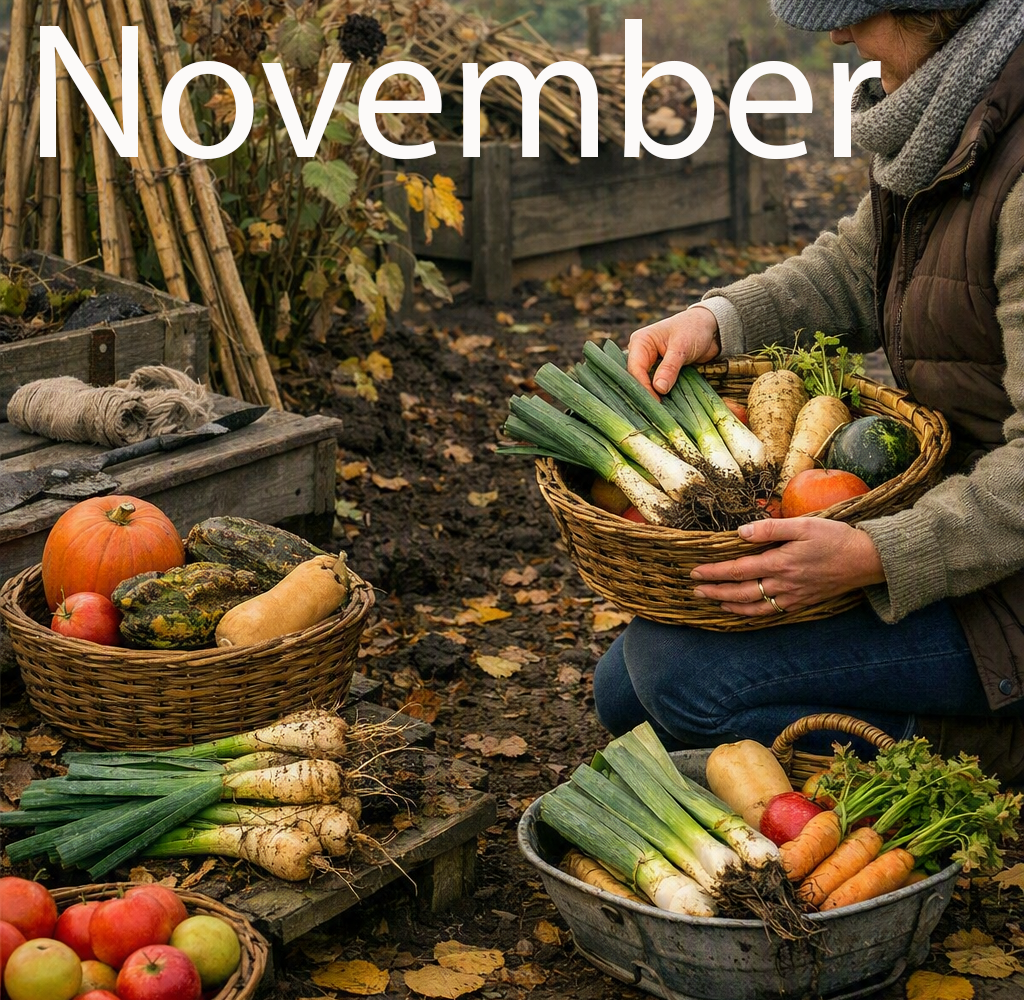
🌬️ November – what to sow or plant 

What to sow in November

  • You can still sow overwintering broad beans. They’ll establish before the cold sets in and give you an early crop next year.
  • Peas such as Douce Provence or Meteor can be sown under cover. They can be sown outside too, but only in mild areas where frost risk is low.
  • November is an excellent month to buy and plant new fruit trees and bushes. The soil is still warm enough for roots to settle in, but avoid planting if the ground is frosted or waterlogged — it’s better to wait than risk poor establishment.

What to do in November

  • Thin out congested spurs on trained fruit trees to improve airflow and fruiting next year.
  • Prune apples, pears, quinces and medlars while they’re dormant. This is the ideal time for shaping and removing dead or crossing branches.
  • Prune red and white currants and gooseberries to maintain an open structure and encourage strong new growth.
  • Leave parsnips in the ground until you need them — they actually taste sweeter after a good frost.
  • Remove yellowing leaves on Brussels sprouts to reduce disease and improve airflow around the plants.
  • Clear plant debris from beds and borders. This helps prevent pests and diseases overwintering in the soil or hiding in old stems.
  • Clean and store bamboo canes somewhere dry so they’re in good condition for next year — damp storage encourages rot and weakens them.

❄️ December – what to Plant 

What to plant in December

  • Plant shallots and garlic in mild areas where the soil is well‑drained. They dislike sitting in cold, wet ground, so choose a sheltered spot or raised bed if your soil tends to stay heavy in winter.

What to do in December

  • Prune autumn raspberries by cutting all fruited canes right down to the ground. This encourages strong new growth for next year’s crop.
  • Thin out congested spurs on trained fruit trees to improve airflow and fruiting potential.
  • Prune apples, pears, quinces and medlars while they’re dormant. This is the ideal time for shaping and removing damaged or crossing branches.
  • Prune red and white currants and gooseberries, keeping the centre of the bush open to reduce mildew and improve fruit quality.
  • Continue removing yellowing leaves on Brussels sprouts to help prevent disease and improve airflow around the stems.
  • Clear plant debris from your vegetable beds. This reduces the spread and overwintering of pests and diseases — a simple job that pays off in spring.
  • Plan your crop rotation for next year. Rotating crops helps prevent disease build‑up and keeps soil nutrients balanced.
  • Clean, repair and service tools. December and January are perfect months for giving everything a good scrub, sharpening blades and checking handles — you’ll thank yourself in spring.